
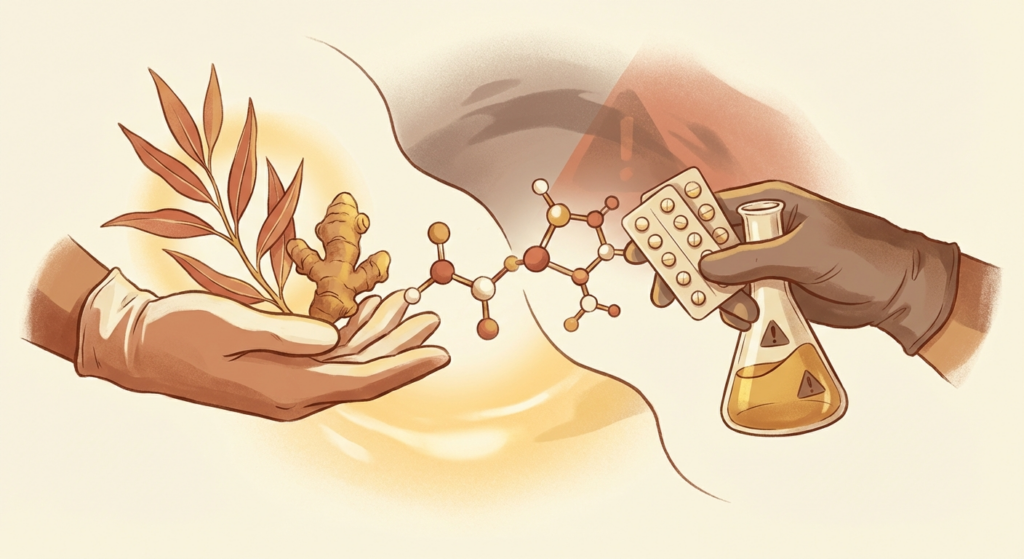
Buried inside willow bark, opium latex, and coca leaf was the pharmacologic template that laboratories later copied, purified, and weaponized against pain.
Human bodies accepted relief long before factories got the dosing that was standardized right.
Human bodies also paid for relief from pain long before factories scaled it.
Natural remedies and synthetic painkillers share a parentage: each exploits compounds that interrupt nociception, dull inflammation, or mute central perception of injury.
The paradox sits in plain view.
The same intervention that grants relief from pain also imports liability, because the molecule that blunts pain can also distort breathing, gastric lining, judgment, bowel motility, renal filtration, or dependence circuits.
Ancient healers lacked precise measurements – something modern pharmacies supplied while magnifying the hazard at the same time.
(Source: Basic Opioid Pharmacology – An Update (PMC), 2020 – pmc.ncbi.nlm.nih.gov/articles/PMC7265597)
Aspirin emerged from a plant lineage, and morphine emerged from an opium lineage, yet purification increased both predictability and toxic reach.
Dose changed fate.
The same intervention that grants relief from pain also imports liability, because the molecule that blunts pain can also distort breathing, gastric lining, judgment, bowel motility, renal filtration, or dependence circuits.
Across millennia, physicians, apothecaries, chemists, and regulators kept encountering the same bargain under new names: broader pain control purchased with narrower safety margins, or milder safety purchased with weaker and less reliable relief from pain.
Effectiveness comparison: natural remedies vs synthetic painkillers
Spilled into modern guidelines, nonpharmacologic care retains measurable value for pain relief, but synthetic painkillers still dominate when pain intensity, inflammatory load, or postoperative tissue disruption demand fast and unswerving measurements.
The crude opposition fails.
Turmeric extracts can reduce knee osteoarthritis pain in randomized comparisons, and acupuncture can ease chronic non-specific low back pain, yet neither approach produces the broad, dose-calibrated consistency that ibuprofen, naproxen, diclofenac, or other NSAIDs usually deliver across large patient groups.
Strength varies.
How you standardize the dose decides everything.
In 2017, the American College of Physicians recommended non-drug treatment first for acute and chronic low back pain, including acupuncture among selected options – partly because many patients improve without immediate escalation to stronger pharmaceuticals and partly because adverse-effect burdens matter when pain persists for months.
A Cochrane review on acupuncture reported low-certainty evidence for chronic non-specific low back pain rather than decisive superiority.
The record stayed mixed.
By contrast, NSAIDs repeatedly produce larger average short-term effects for relief from pain in inflammatory conditions because those drugs inhibit cyclooxygenase enzymes with pharmacokinetic regularity that plant preparations, practitioner-dependent needle protocols, and heterogeneous supplement formulations don’t match.
Aspirin’s predictability came from purification, but that same process amplified its toxic potential.
A 2021 systematic review and meta-analysis evaluated turmeric extracts for knee osteoarthritis in randomized controlled settings and found reduction in pain against comparators, but product formulations differed enough to blur cross-trial precision.
Aspirin began as a plant-lineage idea and became a laboratory product because chemists wanted steadier effect, lower batch variability, and easier calculation of doses.
The old bargain reappears here in a form used in clinics: remedies closer to source often carry wider compositional drift, whereas synthesized drugs compress that drift and amplify both effect and exposure risk.
- NSAIDs (ibuprofen, naproxen, diclofenac) – deliver broad, dose-calibrated consistency across patient groups due to standardized dosing and reliable pharmacokinetics
- Turmeric extracts – demonstrate pain reduction in osteoarthritis, but with variable efficacy due to differing product formulations and inconsistent concentrations
- Acupuncture – can ease chronic low back pain, though evidence is of low certainty and effects are practitioner-dependent
- Plant-derived remedies – often show compositional drift, leading to less predictable outcomes compared to synthetic drugs
Acetaminophen performs poorly for low back pain despite its pharmaceutical standardization, and that failure stripped one common assumption from the field.
Molecules matter more than polish in industry.
Patients with severe renal colic, postoperative pain, fractures, or advanced arthritis usually obtain stronger short-term relief from synthetic painkillers than from acupuncture sessions or turmeric capsules, but patients with mild chronic musculoskeletal pain sometimes gain enough benefit from therapy that’s nonopioid to avoid escalation of doses, gastric injury, sedation, or dependency pathways.
Clinical records keep the comparison unresolved because effectiveness never stands alone; stronger relief from pain keeps arriving fused to broader physiologic liability.
Are natural drugs better than synthetic drugs?
It was receptor binding that equalized natural opioids and synthetic opioids: both classes block pain signals by attaching to opioid receptors in the brain.
Moral categories mislead.
Morphine comes from the opium poppy, and fentanyl comes from a laboratory, yet the central nervous system does not reward botanical origin with superior safety or superior virtue.
Molecules rule.
Source labels don’t.
Derived from Papaver somniferum, morphine and codeine entered medicine as plant products long before industrial chemistry expanded the opioid inventory – but their effect for pain relief still depends on the same receptor systems that later synthetic opioids exploited with far greater potency.
(Source: Basic Opioid Pharmacology – An Update (PMC), 2020 – pmc.ncbi.nlm.nih.gov/articles/PMC7265597)
Fentanyl can reach about 100 times the strength of morphine.
That number alters practice.
An anesthetist can use microgram quantities to secure relief from pain that is intense, but the same potency narrows the distance between treatment and fatal respiratory suppression, especially when tolerance, alcohol, benzodiazepines, or dosing error enter the case.
- Morphine (natural opioid) – binds to opioid receptors to block pain, but carries risk of dependence and respiratory depression
- Fentanyl (synthetic opioid) – offers up to 100× the potency of morphine, enabling microgram dosing but with a much narrower safety margin
- Codeine – derived from opium poppy, used for moderate pain, but metabolized variably and may cause sedation and constipation
- Synthetic opioids (e.g., tramadol, methadone) – designed for targeted receptor activity, but can trigger rapid tolerance and withdrawal
Under bedside conditions, “better” depends on the target: palliative cancer pain, perioperative anesthesia, and trauma stabilization reward potency and titratability, whereas outpatient chronic pain management punishes both natural and synthetic opioids when repeated exposure recruits tolerance, constipation, endocrine disruption, hyperalgesia, and dependence. (Source: Merck Manual Professional Edition, 2025 – merckmanuals.com/professional/neurologic-disorders/pain/treatment-of-pain)
The old contradiction remains soldered in place.
A compound can provide relief from pain because it powerfully occupies opioid receptors, and that same receptor occupation can convert relief into hazard with no respect for whether the molecule grew in a field or emerged from a reactor.
Side effects of natural remedies compared to synthetic painkillers
Tangled up with effectiveness, side effects expose the hidden accounting system of relief from pain: every analgesic method purchases comfort by placing stress somewhere else in the body.
Natural remedies often appear gentler. Plants, teas, topical rubs, and methods based on needles usually arrive with lower acute toxicity than concentrated pharmaceuticals.
That appearance misleads.
Kava can injure the liver, willow bark can irritate the stomach and alter bleeding risk, and herbal mixtures can vary so widely in composition that one bottle barely resembles the next.
- Kava – can cause liver injury, especially with chronic or high-dose use
- Willow bark – may irritate the stomach lining and increase bleeding risk due to salicylate content
- Herbal mixtures – often display wide composition variability, leading to unpredictable side effects and efficacy
- Topical rubs and teas – usually have lower acute toxicity but may interact with medications or cause allergic reactions
Among nonopioid synthetic drugs, acetaminophen, ibuprofen, and naproxen occupy the entrenched protocol for mild to moderate pain because stores sell them without prescription and patients treat them as routine household objects. (Source: FDA OTC Pain Relievers and Fever Reducers page, 2025 – fda.gov/drugs/understanding-over-counter-medicines/safe-use-over-counter-pain-relievers-and-fever-reducers)
Routine does not mean harmless.
The FDA states that adults and children 12 years and older should not exceed the maximum total acetaminophen dose in 24 hours – a limit set because overdose can produce severe hepatic injury and acute liver failure.
Ibuprofen and naproxen reduce inflammation effectively, but gastrointestinal bleeding, renal strain, sodium retention, and blood-pressure elevation remain embedded liabilities. These drugs carry risks that doctors measure in emergency rooms every day.
Common painkillers sold as household pain relievers can cause acute liver failure at doses that were standardized.
In July 2015, the FDA strengthened warnings that non-aspirin NSAIDs can increase the risk of heart attack or stroke, and the agency stated that risk can occur as early as the first weeks of use. (Source: FDA Drug Safety Communication on non-aspirin NSAIDs, 2015 – fda.gov/drugs/drug-safety-and-availability/fda-drug-safety-communication-fda-strengthens-warning-non-aspirin-nonsteroidal-anti-inflammatory)
Short-term use can still damage.
That fact overturned a common lay assumption that only long exposure creates cardiovascular danger.
Aspirin complicates the field further because low-dose aspirin can prevent thrombosis in selected patients even while higher analgesic doses can erode gastric mucosa and provoke bleeding. The same molecule that protects can harm.
In July 2015, the FDA strengthened warnings that non-aspirin NSAIDs can increase the risk of heart attack or stroke, and the agency stated that risk can occur as early as the first weeks of use. (Source: FDA Drug Safety Communication on non-aspirin NSAIDs, 2015 – fda.gov/drugs/drug-safety-and-availability/fda-drug-safety-communication-fda-strengthens-warning-non-aspirin-nonsteroidal-anti-inflammatory)
Natural remedies usually diffuse risk through weaker potency and inconsistent concentration; synthetic painkillers compress risk into standardized molecules with unswerving measurements, sharper benefit curves, and sharper toxicity curves.
The bargain stays the same.
Better control over relief from pain keeps arriving attached to better control over harm only in part, because tighter pharmacology often narrows the margin for error rather than widening it.
Long-term safety and risk profiles
In chronic use, synthetic opioids impose the steepest long-horizon hazards, because repeated receptor exposure drives tolerance, dependence, withdrawal, and, in some patients, addiction or opioid use disorder.
Time changes the drug.
A dose that provided relief from pain in week one can lose force by month three, pushing escalation that enlarges respiratory risk, constipation burden, endocrine disruption, sleep-disordered breathing, falls, and overdose probability.
Natural remedies can also injure patients over time, but most do so through slower attrition, variable potency, organ toxicity from cumulative exposure, or delayed interaction with other drugs rather than through the accelerated neuroadaptation typical of high-potency opioids.
- Synthetic opioids (e.g., fentanyl, oxycodone) – drive rapid tolerance, dependence, and withdrawal, increasing overdose risk with chronic use
- Acetaminophen – chronic or high-dose use may cause severe hepatic injury and acute liver failure
- NSAIDs (ibuprofen, naproxen) – accumulate renal, gastrointestinal, and cardiovascular liabilities, especially in older adults or those with comorbidities
- Natural remedies – may cause organ toxicity or drug interactions over time, but typically with slower onset and less pronounced neuroadaptation
The 2022 CDC Clinical Practice Guideline for Prescribing Opioids for Pain stressed maximizing nonopioid therapies when appropriate for the specific condition and patient – a position shaped by years of mortality data and clinical records showing that chronic opioid therapy often fails to preserve function even when it preserves dependence.
Institutions learned late.
Tolerance and dependence develop more quickly with synthetic opioids than with natural opioids, because fentanyl-class compounds and similar agents deliver stronger receptor occupation and more abrupt conditioning of pharmacodynamics.
Withdrawal follows.
Patients then chase relief from two pains at once: the original disorder and the drug-adapted body.
Long-term use for therapy with opioids can preserve dependence even when it fails to preserve function.
In January 2011, the FDA limited prescription combination acetaminophen products to 325 mg per dosage unit because repeated exposure and overdose had produced severe liver injury in routine practice, not merely in spectacular poisonings.
Long-term danger doesn’t require euphoria.
That fact cuts against the public habit of ranking nonopioid tablets as categorically safe and opioids as the sole chronic threat.
Ibuprofen and naproxen also build up renal, gastrointestinal, and cardiovascular liabilities with persistent use, particularly in older adults and in patients with hypertension, chronic kidney disease, heart failure, anticoagulant therapy, or prior ulcer disease.
Duration exposes the central contradiction with unusual clarity: the medicines that maintain analgesia across months also train the body to need them, and the remedies that avoid that trap often supply weaker relief from pain or relief that’s less standardized over the same interval.
Cost comparison: natural pain relief vs pharmaceutical painkillers
Regulation distorted the price map as much as chemistry did, because patients pay for access, branding, testing, practitioner time, and legal status rather than for molecules alone.
Cheapness often belongs to pharmaceuticals produced en masse.
Generic ibuprofen, acetaminophen, and naproxen usually cost less per dose than branded herbal capsules, repeated acupuncture visits, concentrated turmeric extracts, topical arnica gels, or premium cannabidiol products.
Receipts settle the point.
Natural doesn’t guarantee lower spending.
- Generic OTC NSAIDs and acetaminophen – typically offer the lowest per-dose cost due to mass production and insurance coverage
- Herbal capsules and extracts – often cost more per dose due to branding, extraction processes, and lack of insurance coverage
- Acupuncture and practitioner-based therapies – incur additional costs for repeated sessions and professional time
- CBD products – remain expensive due to extraction, testing, and branding, despite broader legal access since 2018
The 2018 Agriculture Improvement Act removed hemp – defined as cannabis with no more than 0.3 percent delta-9 THC on a dry-weight basis – from the federal controlled-substance definition, and that legal change opened a national retail channel for CBD oils, gummies, tinctures, creams, and capsules. (Source: FDA testimony on Hemp Production and the 2018 Farm Bill, 2019 – fda.gov/news-events/congressional-testimony/hemp-production-and-2018-farm-bill-07252019)
Market access expanded fast.
But prices didn’t collapse into commodity levels because extraction, testing claims, branding premiums, and uneven state retail structures kept many CBD products expensive.
In 2019 congressional testimony, the FDA stated that the 2018 Farm Bill explicitly preserved FDA authority over hemp products, which meant legality did not equal full therapeutic validation or quality control that was standardized.
Natural remedies often cost more per dose than mass-produced pharmaceuticals despite their “simpler” image.
Prescription synthetics can become far more expensive than natural options when patents, insurance barriers, copays, abuse-deterrent formulations, emergency treatment for adverse effects, or long-term dependency care enter the ledger.
Hidden costs dominate.
A bottle of generic tablets may cost little at the pharmacy counter, but a gastrointestinal bleed from NSAIDs or a hospitalization for overdose can dwarf the initial savings. Those savings can vanish fast when complications hit.
By contrast, an herbal tea or stretching program may impose modest direct cost and lower catastrophic risk, yet weak efficacy can generate repeated spending through treatment failure, missed work, and clinician shopping.
CBD products often cost more than over-the-counter NSAIDs even though many buyers treat these products as simpler, less industrial substitutes.
Price follows uncertainty.
The recurring historical trade remains intact here: stronger, dosing that was standardized often arrives cheaply at the point of sale because industry scales it, while the later bill for monitoring, adverse events, and dependency can exceed the upfront economy by a brutal margin.
Speed of action: do synthetic painkillers work faster than natural remedies?
Carved out by pharmacokinetics, the short answer is yes: synthetic painkillers usually act faster than natural remedies because laboratories can design molecules, formulations, and delivery routes for rapid absorption and rapid receptor exposure.
Time matters in relief from pain.
Oral aspirin typically begins relieving pain within 20 to 30 minutes, and evidence tables cited by AHRQ/NCBI place intravenous acetaminophen at an analgesic onset of 5 to 10 minutes, far ahead of most plant-based preparations, massage regimens, or cumulative nonpharmacologic protocols.
- Intravenous acetaminophen – achieves analgesia in 5 – 10 minutes due to direct bloodstream delivery
- Oral aspirin – begins pain relief within 20 – 30 minutes after ingestion
- Natural topical remedies (e.g., capsaicin cream) – may require up to two weeks for noticeable effect, per NHS guidance
- Ginger supplements – reduce pain in dysmenorrhea but do not act as rapidly as synthetic rescue tablets
Synthetic design targeted speed from the beginning, because clinicians treating postoperative pain, fractures, severe headache, fever, dental injury, and emergency-room syndromes could not wait days for gradual modulation.
Oral ketorolac takes longer than intravenous acetaminophen, which shows that route can matter as much as molecule.
Delivery systems govern onset.
Natural remedies usually depend on slower mechanisms: gastrointestinal absorption of heterogeneous compounds, repeated topical exposure, or effects on inflammation that build over days rather than minutes.
Intravenous acetaminophen provides relief from pain in minutes, while some natural remedies take weeks to work.
For a natural topical remedy, NHS guidance states that capsaicin cream may provide some relief from pain within the first two weeks of use.
Two weeks isn’t rapid.
A 2024 systematic review and meta-analysis of ginger for primary dysmenorrhea included 24 studies for qualitative analysis, and those data supported pain reduction, but the intervention did not function like a rescue tablet for abrupt pain spikes.
Acute episodes punish delay.
Chronic syndromes sometimes tolerate it.
Fast action does not belong exclusively to synthetics in every case – smoked or vaporized plant-derived cannabinoids can alter perception within minutes, faster than many swallowed tablets. (Source: HHS scheduling recommendation PDF, 2024 – hhs.gov/sites/default/files/scheduling-recommendation.pdf)
That route carries its own liabilities.
The recurrent exchange remains visible in onset data: the methods that strike pain quickly usually reach systemic targets with greater force, and that same speed often increases error in dosing, exposure to toxicity, and potential for misuse.
Choosing between natural and synthetic pain relief for your situation
Forced by symptoms rather than ideology, treatment choice should follow pain mechanism, severity, duration, comorbid disease, concurrent drugs, age, pregnancy status, and the functional goal the patient needs to recover.
Labels mislead.
Natural” doesn’t automatically fit chronic kidney disease, anticoagulant use, liver disease, or pregnancy, and “synthetic” doesn’t automatically mean excessive risk when a short course, a low dose, and a clear indication align.
Context governs safety.
Mechanism governs usefulness.
- Acute severe pain (surgery, fracture, renal colic) – often requires fast-acting pharmaceuticals for immediate control and functional recovery
- Mild chronic musculoskeletal pain – may respond to non-pharmacologic therapies (physical therapy, heat, exercise, acupuncture, cognitive behavioral therapy)
- Osteoarthritis – initial management may include exercise, weight reduction, topical agents, and intermittent NSAIDs before escalating to stronger options
- Metastatic bone pain – typically needs opioids plus adjuvant measures, as non-pharmacologic therapy alone is insufficient
Severe pain can still improve with movement-based therapy after the acute phase – a point that overturns the common assumption that stronger pain always needs a stronger pill for the entire course. Time changes indication. A patient with osteoarthritis may begin with scheduled exercise, weight reduction, topical agents, and intermittent NSAIDs. But a patient with metastatic bone pain may need opioids plus adjuvant measures because non-pharmacologic therapy alone won’t suppress that nociceptive load.
Function sets the threshold.
A stronger pill isn’t always needed for relief from pain – timing and mechanism can reverse expectations.
The practical question never asks whether one camp’s pure and the other corrupted. The practical question asks which option buys enough relief from pain for the specific body in front of the clinician without charging too much in bleeding, sedation, liver injury, dependence, falls, or delay, and that old exchange remains attached to every choice.
Risks of misinformation and combining both approaches safely
Gripped by false certainty, patients often create the highest danger when they mix “natural” products with pharmaceuticals under the assumption that low-tech means low-risk.
That assumption kills.
Herbal sedatives can boost opioid depression, unlabeled supplements can twist liver metabolism, and online advice can push users toward stacking agents without any grasp of equivalence between doses, delayed onset, contamination, or duplicate ingredients.
Misinformation travels faster than toxicology reports.
Bodies absorb the error.
- Herbal sedatives + opioids – can dangerously intensify respiratory depression and sedation
- Unlabeled supplements – may alter liver metabolism, leading to unpredictable drug interactions and toxicity
- Stacking agents – increases risk of exceeding toxic thresholds, especially when multiple products contain the same active ingredient (e.g., acetaminophen)
- Illicit synthetic opioids – often contain unknown compositions, raising the risk of accidental overdose and failed rescue
When synthetic opioids enter the picture, ignorance becomes exceptionally unforgiving because potency collapses the margin for correction.
A dose of fentanyl as small as two milligrams can be lethal.
Illicit synthetic opioids often contain unknown compositions – meaning a powder sold as one drug may contain fentanyl, carfentanil analogs, benzodiazepines, xylazine, or other contaminants that change risk to respiration and blunt timing for rescue.
Naloxone can reverse opioid overdose, but naloxone does not neutralize every co-ingestant and does not replace emergency care.
Mixing “natural” and pharmaceutical remedies can kill faster than either alone because risks multiply.
In February 2018, the DEA temporarily classified fentanyl-related substances as Schedule I under the Controlled Substances Act, a move that reflected the scale of overdose lethality rather than a completed mastery of the market. (Source: DEA press release on emergency scheduling of illicit fentanyls, 2018 – dea.gov/press-releases/2018/02/07/us-drug-enforcement-administration-emergency-schedules-all-illicit)
Law did not stabilize composition.
Illicit supply chains kept mutating.
Many people assume therapy in combination becomes safer when each individual component seems modest, yet two weak sedating agents or two products that each contain acetaminophen can exceed toxic thresholds more easily than one recognized high-risk drug taken under supervision.
Safe combination requires disclosure of every capsule, tea, tincture, cream, edible, and tablet to one clinician or pharmacist, because the same pursuit of relief from pain that broadens options also broadens collision points among substances, doses, and delayed toxic effects.
Understanding natural remedies, synthetic painkillers, and the history of pain management
At the end of the record, pain management still rests on the same molecular bargain that ancient healers and modern chemists both recognized: compounds that suppress suffering also threaten the body that receives them.
Natural remedies usually begin with plant matter, minerals, topical preparations, movement-based care, or needle-based methods that humans adopted before laboratory pharmacology existed.
Synthetic painkillers arise from chemistry on a factory scale, receptor mapping, formulation science, and mass manufacturing designed to deliver measurements that are unswerving, predictable onset, and scalable distribution.
The division looks clean.
History makes it dirty.
- Codeine – derived from the opium poppy, used for mild to moderate pain, with risk of sedation and dependence
- Thebaine – also from opium poppy, precursor to semi-synthetic opioids
- Oxycodone and hydrocodone – semi-synthetic opioids, created by modifying plant alkaloids for distinct pharmacologic profiles
- Fentanyl, methadone, tramadol – fully synthetic opioids, engineered for potency, rapid onset, and tailored receptor activity
Withdrawal from synthetic opioids can last several days or weeks and may require medical supervision – meaning the treatment history of pain crosses directly into the treatment history of dependence.
Medication-assisted treatment with methadone (first synthesized by German chemists in 1937) can reduce cravings and stabilize brain chemistry in opioid use disorder, so one synthetic opioid can become the medical response to injuries caused by opioid exposure itself.
The system loops back on itself.
Relief from pain created a second field of repair.
Withdrawal from synthetic opioids can last several days or weeks and may require medical supervision, which means the treatment history of relief from pain crosses directly into the treatment history of dependence.
Nothing in that chronology resolves the original contradiction.
The same source material that once sat in bark, resin, leaf, or latex now appears in engineered analogs, blister packs, infusion pumps, and guidelines for treatment, yet the exchange remains unchanged. Every stronger hand laid on pain still casts a longer shadow over the patient – the shadow just grows darker with each new compound we make.