


For millennia, the human quest to silence physical suffering has driven medical innovation, evolving from ancient herbal decoctions to the sophisticated Painkillers found in modern pharmacies. While the Sumerians utilized opium poppy as early as 3400 BCE, today’s pharmaceutical landscape offers a complex array of substances engineered to intercept discomfort at its source. Understanding the mechanisms behind these diverse treatments requires looking beyond the medicine cabinet at the distinct chemical pathways they employ.
These medications form a diverse collection of chemical tools. Non-steroidal anti-inflammatory drugs, or NSAIDs, function by reducing the hormones that cause inflammation and pain in conditions like Arthritis. Acetaminophen, meanwhile, works primarily within the central nervous system to elevate your overall pain threshold. For more severe agony, Opioids interact with receptors in your brain to block intense signals before they ever reach your consciousness.
Origins of pain relief: from ancient remedies to early pharmacology
Ancient healers used raw botanical potency to quiet physical suffering. The Ebers Papyrus — a record from approximately 1550 BCE — documents the use of willow or salix bark for non-specific pains (1). These early practitioners relied entirely on the natural environment. Opium and willow bark served as the primary foundations for managing discomfort across early civilizations.
- Ancient Egyptian texts like the Ebers Papyrus describe botanical treatments for inflammation.
- Opium poppy derivatives provided potent, though unregulated, sedation and analgesia.
- Willow bark was chewed or brewed to address systemic aches.
Standardization arrived centuries later. Thomas Sydenham popularized a liquid opium tincture known as Laudanum, promoting this preparation in his 1676 medical writings and creating a consistent method for administering the sedative (2). By 1828, chemists successfully isolated Salicin from willow bark (3) — a discovery that established a vital chemical bridge to Salicylic acid and set the stage for modern drug synthesis. Regulation eventually followed. The Harrison Narcotics Tax Act of 1914 was enacted in the United States to control Opium and coca derivatives through strict registration and taxation (4).
NIH and WHO perspectives on opioid history
Balancing potent analgesic effects with the inherent risk of dependency remains a central challenge for global health authorities. The story has deep roots. Friedrich Sertürner isolated morphine from Opium between 1803 and 1817 (5) — the first time a pure alkaloid had been isolated from a plant. It marked a turning point for pharmacology.
The NIH described the U.S. opioid epidemic as fundamentally tied to a significant rise in opioid analgesic prescribing that began in the mid-to-late 1990s, including higher-risk prescribing such as high doses and longer durations.
Institutional responses have targeted both treatment and prevention. On 1 January 2009, the WHO published a 110-page guideline on psychosocially assisted pharmacological treatment for those dependent on heroin or other substances (6), integrating medicines like methadone with social support. The scale of the crisis is immense. The WHO estimated in 2014 that 69,000 people died annually from opioid overdose (7), and recommended increased naloxone access and training for witnesses — including friends and family of those at risk. These historical and regulatory developments eventually paved the way for the rise of synthetic, non-addictive pain management options.
Aspirin and the rise of non-opioid analgesics
Modern pharmacology transformed when a simple willow-bark derivative evolved from folk remedy into pharmaceutical staple. The chemical journey began in 1838, when Raffaele Piria converted salicin into a more potent acidic compound (8), establishing salicylic acid as the primary precursor for future developments. The raw acid, however, was often difficult for patients to tolerate — its harshness on the digestive system was a persistent problem.
- Synthesis at Bayer: Felix Hoffmann produced a pure and stable form of acetylsalicylic acid in 1897 while working at Bayer, which then registered the Aspirin name in 1899 (9).
- Mechanism of Action: John Vane demonstrated in 1971 that Aspirin works by blocking Cyclo-oxygenase enzymes to inhibit the formation of Prostaglandins, a discovery for which he shared the Nobel Prize in Physiology or Medicine in 1982 with Sune Bergstrom and Bengt Samuelsson (10).
- NSAID Classification: As part of the broader class of NSAIDs, these agents reduce pain and inflammation by preventing COX enzymes from producing Prostaglandins.
These discoveries gave researchers a scientific foundation for understanding how non-steroidal anti-inflammatory drugs modulate the body’s pain signals. Aspirin remained the standard for decades, but the search for alternatives with different durations of action eventually led to other common NSAIDs. Acetaminophen also emerged as a key non-opioid painkiller — its unique mechanism and safety profile set it clearly apart from the salicylate family.
Ibuprofen, naproxen, and COX-2 inhibitors: a safer evolution
Researchers pursued new chemical structures to deliver effective relief with better gastrointestinal tolerance than early salicylates. That effort led Stewart Adams and John Nicholson at Boots to file a patent for 2-(4-isobutylphenyl) propionic acid in 1961 (11). This compound — ibuprofen — was originally developed to manage rheumatoid arthritis more effectively than existing options. It soon became a versatile tool for acute and chronic pain alike.
- Naproxen
- Approved in 1976, this medication is valued for its 12-to-17-hour elimination half-life. Over-the-counter versions are typically dosed every 8 to 12 hours.
- COX-2 inhibitors
- This class includes celecoxib, approved in 1998 to target inflammation specifically. However, the 2004 withdrawal of Vioxx highlighted significant cardiovascular risks associated with some selective inhibitors.
- NSAID Safety Profile
- Long-term use of these drugs carries risks of gastric irritation, internal bleeding, kidney issues, and potential heart problems.
The evolution of these compounds reflects a continuous effort to balance efficacy with patient safety. Clinicians must weigh the rapid relief provided by naproxen or ibuprofen against the potential for systemic side effects — a trade-off that remains central to modern pain management. Beyond the traditional NSAID class, agents like acetaminophen offer alternative pathways for treating discomfort without the same gastric risks.
Acetaminophen: discovery, mechanism, and limitations
Early efforts to replace toxic coal-tar derivatives led researchers to re-examine Acetanilide and Phenacetin. Acetanilide entered medical practice in 1886, but its tendency to cause cyanosis forced a search for safer alternatives (12). Phenacetin followed a similar path — gaining popularity before safety concerns curtailed its global use. Then in 1948, Brodie and Axelrod demonstrated that both substances were metabolized into N-acetyl-p-aminophenol (13). That finding changed everything.
Commercial success followed quickly. The FDA approved Tylenol Elixir for Children in 1955, making it a primary non-aspirin option for managing fever and discomfort. Despite its widespread adoption, the drug lacks anti-inflammatory properties and carries a significant risk of liver damage if taken in excess.
How acetaminophen blocks pain without reducing inflammation?
Research into this analgesic suggests it primarily targets the central nervous system. Rather than acting at the site of injury, it appears to inhibit COX enzymes within the brain and spinal cord. The result is relief from discomfort without any alteration of the biological processes that cause swelling or redness.
- Enzymatic reduction: The drug acts as a reducing cosubstrate at the peroxidase site of prostaglandin H2 synthetase, though high concentrations of hydroperoxides in inflamed tissue can easily override this effect.
- Metabolic signaling: The compound is converted into AM404, a metabolite that interacts with the endocannabinoid system to modulate how the brain perceives sensory signals.
This unique central mechanism established acetaminophen as the primary clinical alternative to aspirin, particularly for patients with gastric sensitivities or those for whom NSAIDs are contraindicated due to bleeding risks.
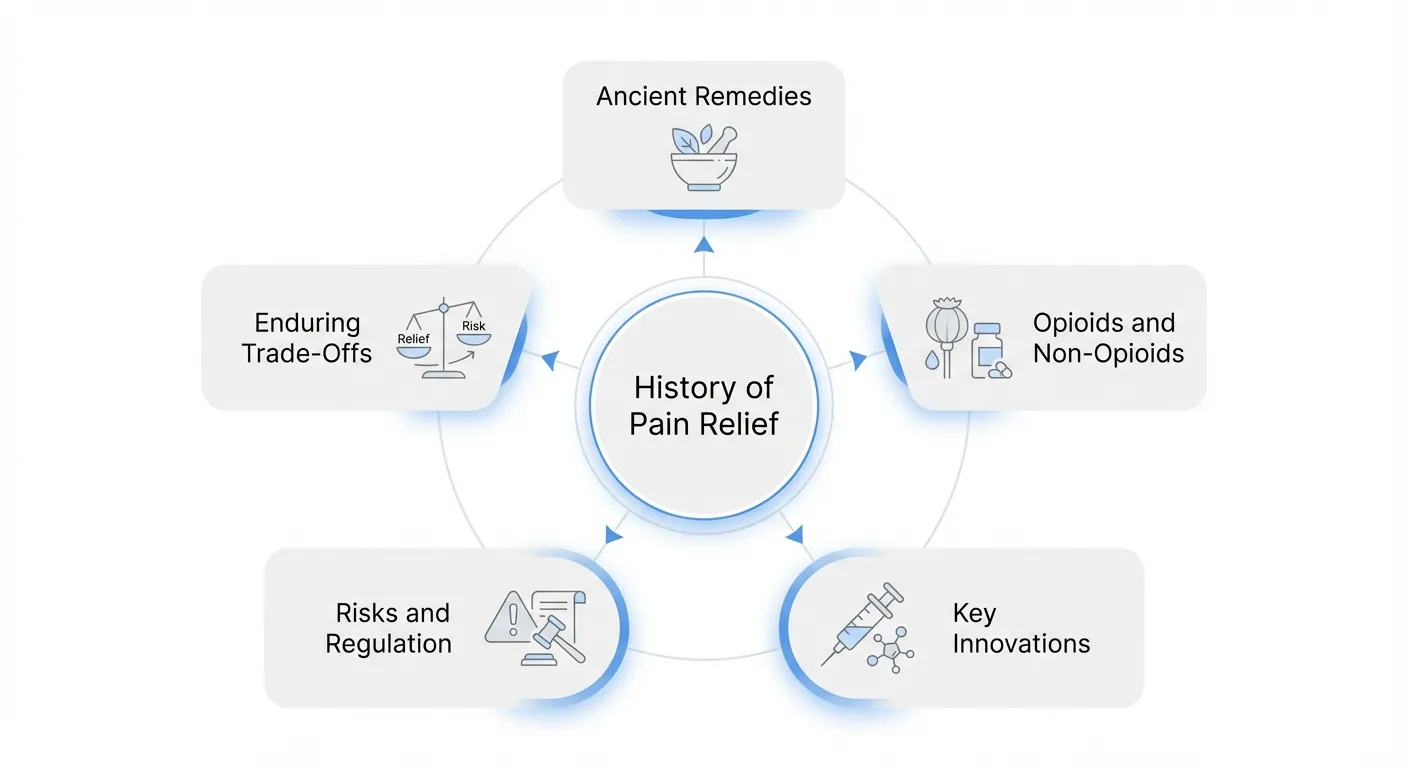
Opioids vs NSAIDs: historical trade-offs in efficacy and safety
The clinical dilemma intensified following the aggressive opioid prescribing surge of the 1990s, forcing a reassessment of how immediate symptom relief balances against long-term physiological consequences. While Opioids bind to central nervous system receptors to effectively dampen discomfort, they carry severe risks including addiction, misuse, and fatal respiratory depression. Consequently, NSAIDs emerged as the preferred alternative for mild-to-moderate conditions, offering a more manageable risk profile and fewer regulatory hurdles during this shift in pain management protocols.
The history of these substances reveals a complex pharmaceutical evolution. Charles Romley Alder Wright first synthesized diamorphine in 1874; Bayer later registered the Heroin trademark in 1898 before launching the product commercially in 1899. Despite the known risks, Opioids are still prescribed to approximately 20% of adults in the United States who suffer from chronic pain.
| Attribute | Opioids | NSAIDs |
|---|---|---|
| Primary Mechanism | Binding to Opioid receptors | Inhibition of COX enzymes |
| Common Usage | Severe or chronic pain | Mild-to-moderate inflammation |
| Primary Risks | Addiction, overdose, and death | Gastrointestinal and renal stress |
Non-opioid alternatives and the FDA’s push away from opioids
Regulatory bodies have pivoted toward prioritizing analgesic treatments that don’t rely on traditional narcotic pathways — a direct response to the opioid public health crisis. The FDA has released draft guidance to accelerate the approval of non-opioid medications for chronic pain management, an initiative that aligns with the SUPPORT Act, which mandates specific frameworks for evaluating safer therapeutic options.
Current research focuses on specific non-opioid mechanisms, such as selective sodium channel blockers like NaV1.8 inhibitors, to provide targeted relief without high dependency potential. While some clinical strategies still utilize combination painkillers—pairing non-opioids with mild narcotics like codeine to enhance efficacy—these formulations carry inherent risks requiring strict oversight. Consequently, advancing novel pathways like nerve growth factor inhibitors remains essential for balancing patient comfort against systemic harm.
| Advantages | Limitations |
|---|---|
| Reduced risk of dependency and lethal overdose | May be less effective for acute, severe trauma |
| Streamlined regulatory pathways under the SUPPORT Act | Long-term safety data for new compounds is still emerging |
| Lower societal impact regarding misuse and diversion | Higher cost for newly patented non-opioid formulations |
These evolving regulatory frameworks highlight the necessity of identifying specific demographic groups that remain most vulnerable to the adverse effects of commonly prescribed analgesics.
Safety risks and vulnerable populations across painkiller history
Protecting specific demographic groups requires a vigilant understanding of how analgesics interact with unique biological states. While many medications are tolerated by the general public, children, expectant mothers, and those with chronic conditions face distinct physiological hazards. These dangers are often identified retrospectively, as seen in the 1970s and 1980s when clinical observation finally linked aspirin consumption in children to the development of Reye’s syndrome.
- Pediatric contraindications: Aspirin must never be administered to children or adolescents under 16 years of age. This restriction exists because the medication is linked to the development of Reye’s syndrome, a rare but potentially fatal condition that causes swelling in the liver and brain.
- Metabolic toxicity: Early synthetic analgesics like acetanilide carry severe hematologic risks. When the body processes this compound, it’s metabolized into Aniline, a substance that triggers Methemoglobinemia. This condition impairs the blood’s ability to transport oxygen effectively.
- Prenatal complications: Maternal health choices during the first trimester significantly influence fetal development. Research indicates that the use of Codeine during early pregnancy is associated with an increased risk of congenital malformations in the developing embryo (PMID: 21859996).
- Neurological emergencies: Modern safety labeling now reflects the severe consequences of opioid misuse. An overdose can result in Toxic leukoencephalopathy, a structural brain disorder characterized by the degeneration of white matter.
Clinical protocols are shifting as the medical community identifies these profound vulnerabilities. Physicians look beyond traditional analgesics to find safer alternatives for high-risk patients. Drug classes like muscle relaxants and adjuvant analgesics now supplement the standard toolkit — expanding what’s available when conventional options are too risky.
Adjuvant analgesics and muscle relaxants: expanding the pain toolkit
The clinical landscape shifted significantly during the 1960s and 1970s as practitioners observed that tricyclic antidepressants provided relief for neuropathic symptoms independent of their mood-stabilizing effects. This discovery established adjuvant analgesics as essential components of chronic pain management, particularly for conditions rooted in neurological dysfunction. Today, the National Institute for Health and Care Excellence (NICE) maintains rigorous guidelines to ensure these repurposed therapies are integrated safely and effectively into modern multimodal care plans.
- Gabapentinoids
- This class, which includes Gabapentin and Pregabalin, is frequently utilized for managing chronic nerve pain.
- Antidepressants
- Specific agents such as Amitriptyline and Nortriptyline are common choices for neuropathic symptoms.
- Corticosteroids
- These anti-inflammatory agents are used for musculoskeletal injuries and pain management across various clinical settings.
Muscle relaxants: cyclobenzaprine, baclofen, and tizanidine in practice
Clinicians frequently prescribe muscle relaxants to address the tension and discomfort of acute spasms — a secondary layer of support when localized muscle issues impede recovery or daily function. Effective as they are, their use requires careful monitoring to prevent adverse reactions or long-term dependency. Options vary considerably by patient need.
- Methocarbamol and Diazepam: Common agents used to alleviate pain related to muscle spasms.
- Cyclobenzaprine: This medication is indicated for short-term use of up to 2 or 3 weeks as an adjunct to rest and physical therapy.
- Baclofen: Used for spasticity with a maximum dosage of 80 mg per day; abrupt discontinuation must be avoided as it can cause serious reactions.
- Tizanidine: This agent is contraindicated with strong CYP1A2 inhibitors like fluvoxamine or ciprofloxacin due to risks of hypotension and bradycardia.
Sources
- Duke University Libraries. Exhibit, The History of Aspirin, “Earliest Use” (1550).
https://exhibits.library.duke.edu/exhibits/show/history_aspirin/earliest_use - Hektoen International. “Opium and its derivatives” (1676).
https://hekint.org/2023/09/28/opium-and-its-derivatives/ - Science History Institute. “Aspirin: Turn-of-the-Century Miracle Drug” (1828).
https://www.sciencehistory.org/stories/magazine/aspirin-turn-of-the-century-miracle-drug/ - govinfo.gov. U (1914).
https://www.govinfo.gov/link/statute/38/785 - PubMed. Journal of Anesthesia History article hosted by PubMed Central, “The… (1803).
https://pmc.ncbi.nlm.nih.gov/articles/PMC5125194/ - World Health Organization. Publication page, “Guidelines for the psychosocially assisted… (2009).
https://www.who.int/publications/i/item/9789241547543 - World Health Organization. Publication page, “Community management of opioid overdose” (2014).
https://www.who.int/publications/i/item/9789241548816 - PubMed. Frontiers in Plant Science article hosted by PubMed Central, “Intra and… (1838).
https://pmc.ncbi.nlm.nih.gov/articles/PMC6477076/ - PubMed. BMJ article hosted by PubMed Central, “The discovery of aspirin: a reappraisal” (1897).
https://pmc.ncbi.nlm.nih.gov/articles/PMC1119266/ - Nobel Prize. Official biography/facts page for John R (1971).
https://www.nobelprize.org/prizes/medicine/1982/vane/facts/ - Google Patents. Record for GB971700A, “Anti-Inflammatory Agents” (1961).
https://patents.google.com/patent/GB971700A/en - fda.gov. U (1886).
https://www.fda.gov/about-fda/fda-history-exhibits/drug-therapeutics-regulation-us - Journal of Pharmacology and Experimental Therapeutics. Article, “The fate of acetanilide in man” (1948).
https://jpet.aspetjournals.org/article/S0022-3565(25)03462-7/fulltext
F.A.Q
What were the first painkillers used in history?
The Sumerians and Egyptians used opium poppy and willow bark as some of the earliest painkillers.
How do modern painkillers like NSAIDs and acetaminophen work?
NSAIDs relieve pain by blocking hormones that trigger inflammation, while acetaminophen acts in the central nervous system to raise the pain threshold.
When was aspirin invented and what makes it different from earlier remedies?
Aspirin was developed by Felix Hoffmann at Bayer in 1897. It blocks COX enzymes to prevent the formation of pain-causing prostaglandins, offering a more targeted effect than earlier plant-based remedies.
Why did regulations for painkillers like opium become necessary?
The Harrison Narcotics Tax Act of 1914 and similar laws were enacted to control opium and its derivatives due to their potency and risk of addiction.
What are adjuvant analgesics and when are they used for pain?
Some antidepressants and gabapentinoids, known as adjuvant analgesics, are used to manage chronic or nerve pain when standard painkillers are ineffective or unsuitable.
What risks are associated with opioid painkillers?
Opioids carry a risk of dependency and overdose. Misuse can cause serious health issues, including life-threatening respiratory depression and neurological emergencies.
How has the approach to pain management changed over time?
Over time, pain management has moved from raw plant extracts to a variety of synthetic and targeted drugs, with greater focus on safety, regulation, and combining multiple treatment approaches.
