


Pay close attention to your internal health, because the small gland known as the Prostate plays a significant role in your reproductive well-being. This walnut-sized organ sits tucked beneath your bladder and directly ahead of the rectum. Its primary job involves generating the specific fluid that nourishes and transports sperm within semen — a quiet but essential function most men never think about until something goes wrong.
While it is small, its impact on your daily comfort is substantial. Many men eventually face challenges with this organ, ranging from Benign Prostatic Hyperplasia to more serious conditions like Prostate Cancer. In fact, this specific malignancy ranks as the second most frequent oncological diagnosis among the male population globally (1). So why does it so often go unnoticed until it is advanced?
Early stages of Prostate Cancer often remain silent, showing no outward signs or discomfort to alert you. As the condition advances, however, it may begin to trigger noticeable pain or changes in how you urinate. Because these issues can overlap with Benign Prostatic Hyperplasia, distinguishing between them requires a clear understanding of how the body functions — and that understanding starts with the gland itself.
What the prostate is and why it matters?
Positioned immediately beneath the Bladder and situated anterior to the Rectum, the Prostate serves as a critical junction in the male reproductive system. It is primarily responsible for the secretion of seminal fluid, a substance that accounts for approximately 30% of the total volume of semen (2). This fluid is not merely a carrier. It contains a complex mixture of proteolytic enzymes, prostatic acid phosphatase, fibrinolysin, zinc, and citric acid — each component necessary for the health and mobility of sperm cells.
How the prostate relates to the urethra and urinary function?
During the act of voiding, the Urethral dilator muscle (musculus dilatator urethrae) contracts to expand the passage. This ensures that urine can exit the body efficiently without obstruction — a finely tuned mechanical process that most men take for granted.
Sexual function also relies on these internal muscular dynamics. The Musculus ejaculatorius coordinates the movement of fluids through the same shared pathway during the reproductive process. That dual-purpose anatomy explains why structural changes in the gland often disrupt both urinary and sexual performance simultaneously.
Main types of prostate problems: BPH, prostatitis, and prostate cancer
Prostate health issues typically fall into three primary categories that differ in their underlying causes and biological impact. Identifying whether a condition is inflammatory, structural, or oncological determines the necessary medical response.
- Benign Prostatic Hyperplasia
- A non-malignant growth of the gland that frequently results in various urinary difficulties as the tissue expands.
- Prostatitis
- An inflammatory state of the gland often triggered by bacterial pathogens or other physiological stressors.
- Prostate Cancer
- The development of a malignant tumor within the glandular tissue that requires careful monitoring or intervention.
Most common prostate problem by age group
Age is the primary predictor for the type of prostate issue a man is likely to encounter. Biological shifts over decades change how the gland reacts to hormonal and environmental factors — patterns well-documented across large populations.
- Benign Prostatic Hyperplasia: This condition is most frequent in men over 50, eventually impacting 90% of those over 80, though it rarely presents symptoms before age 40 (3).
- Prostatitis: This represents the leading urinary tract issue for men under 50 and remains the third most frequent concern for those older than 50.
- Prostate Cancer: Most diagnoses occur in later life, with 6 in 10 cases found in men 65 or older and a mean diagnosis age of 67 (4).
Acute vs. chronic prostatitis: how they differ
Prostatitis manifests in distinct temporal patterns that dictate the severity and duration of the patient’s experience.
Acute bacterial prostatitis involves a sudden, intense infection with severe physiological symptoms. Chronic versions, by contrast, last three months or more and may present with far less obvious signs. Chronic pelvic pain syndrome (CPPS) is the most prevalent form — affecting approximately 10-15% of the male population in the United States (5).
BPH vs. prostate cancer: overlapping symptoms and key differences
Clinical differentiation between Benign Prostatic Hyperplasia and Prostate Cancer is vital because their presentations frequently mimic one another. Both conditions can raise prostate-specific antigen levels in the blood and can coexist, making a thorough evaluation essential for an accurate diagnosis.
- Lower urinary tract symptoms are common to both Benign Prostatic Hyperplasia and malignant growths.
- A digital rectal exam allows clinicians to feel for specific physical markers of each condition.
- Benign Prostatic Hyperplasia typically presents as an enlarged, rubbery, and nontender mass.
- Prostate Cancer is often identified by the presence of hard or firm nodules during a physical assessment.
Symptoms of prostate problems
You might notice a sudden change in how often you need the bathroom, or feel a dull ache in your pelvic region that simply won’t subside. Prostate issues frequently manifest through a complex range of urinary symptoms and pain that vary significantly between individuals. Because different conditions often share overlapping signs, identifying the specific cause requires professional evaluation — by organizations like the Mayo Clinic, NHS, or Cleveland Clinic — and these symptoms can range from mild annoyance to significant physical distress.
- Persistent discomfort in the lower abdomen or genital area.
- Pain during urination or when ejaculating.
- Changes in the frequency or urgency of bathroom visits.
BPH symptoms: what Mayo Clinic and NHS describe
Major health authorities agree that non-cancerous enlargement of the prostate typically disrupts normal bladder function through physical obstruction. That pressure on the urethra leads to several distinct changes men often notice during their daily routines.
| Symptom Category | Mayo Clinic Observations | NHS Descriptions |
|---|---|---|
| Flow Quality | Weak urine stream and stop-and-start flow. | Straining to pee or a weak urine stream. |
| Frequency | Increased urinary frequency and nocturia. | Needing to pee more often, especially at night. |
| Bladder Control | Urgency and dribbling at the end of urination. | Sudden urges and incomplete emptying sensations. |
Nocturia and a consistently weak urine stream are among the most commonly reported issues — changes that often develop gradually over several years.
Prostatitis symptoms according to the CDC
The Centers for Disease Control and Prevention highlight how inflammation of the prostate creates a unique symptomatic profile, often involving both localized discomfort and systemic signs of infection.
“Patients may experience painful urination, groin pain, and pain after ejaculation. A specific pattern involving new-onset premature ejaculation that persists for more than three months can also indicate chronic inflammation or pelvic pain syndromes.”
Clinical terms for these experiences include dysuria and dysorgasmia. Some men experience sharp, sudden pain; others deal with a lingering ache in the pelvic floor. Either way, distinguishing these inflammatory signs from other prostate-related changes matters for getting the right treatment.
Early symptoms of prostate cancer per the National Cancer Institute
National Cancer Institute guidelines suggest that early-stage malignancy often presents with very subtle changes easily mistaken for aging — you might find that your bathroom trips are slightly more frequent or that the flow isn’t as strong as it once was. Barely noticeable at first. A weak or interrupted stream are common indicators that the gland is affecting bladder outflow, and some men also report seeing blood in urine or semen, which always warrants a prompt investigation. Persistent pain in the hips, back, or pelvis can also occur if the condition begins to affect surrounding tissues, making it vital to monitor these shifts for early detection.
Warning signs that need urgent medical attention
Recognizing when a symptom crosses from chronic nuisance to medical emergency is vital for your long-term health. Certain complications require immediate stabilization to prevent permanent damage or life-threatening systemic issues.
- If you experience a total inability to pass urine:
- Go to the emergency room immediately for urinary retention relief.
- If you notice hematuria or blood in your semen:
- Schedule an urgent diagnostic appointment to rule out malignancy or severe infection.
- If urinary pain is accompanied by high fever, chills, and confusion:
- Seek emergency care to be screened for sepsis.
Prompt action is the best way to manage these risks. Knowing these signs also prepares you to understand the underlying causes and risk factors that drive them.
Causes and risk factors of prostate conditions
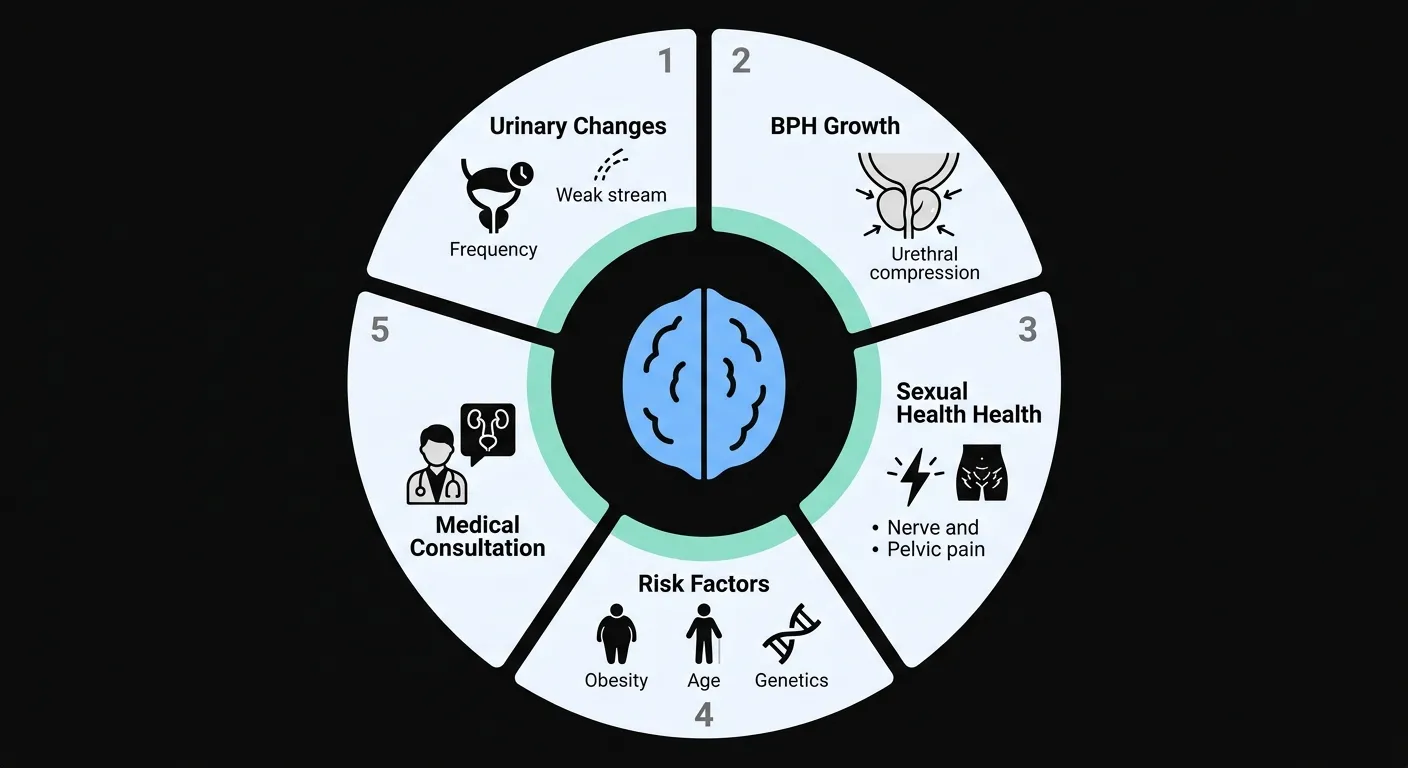
The prostate undergoes a notable second growth phase that typically commences around age 25 (6). This biological expansion continues throughout a man’s life, and Benign Prostatic Hyperplasia frequently emerges during its later stages. Common as it is, medical consensus from the Urology Care Foundation and the NIH indicates it cannot be prevented. It is a natural consequence of aging for many.
What causes enlarged prostate: NIH, ACS, and Urology Care Foundation perspectives?
Research from the NIH and the American Cancer Society highlights several physiological and lifestyle elements that contribute to an enlarged prostate, emphasizing that hormonal shifts and metabolic health play a central role in glandular changes.
- Demographic factors: Advanced age remains the primary driver for tissue expansion.
- Genetic history: A family history of glandular issues significantly increases individual susceptibility.
- Metabolic health: Conditions such as type 2 diabetes and obesity are strongly linked to increased risk.
The American Cancer Society also tracks more severe prostate pathologies. For 2026, they project approximately 333,830 new cases of prostate cancer in the United States, and an estimated 36,320 deaths from the disease that same year (4). These statistics underscore the necessity of regular monitoring as men enter higher-risk age brackets.
BPH risk factors: age, testosterone, and family history per Medscape
Hormonal fluctuations serve as a significant catalyst for glandular changes, according to Medscape. As the balance of testosterone and other hormones shifts with age, it often triggers the proliferation of prostate cells. This process is rarely sudden — it develops over decades.
Genetic predispositions also play a major role in how early or severely these changes occur. If a close relative had an enlarged prostate, your likelihood of developing similar issues increases.
Complications of untreated prostate problems
Never ignore persistent changes in your urinary habits. Leaving these conditions unaddressed can lead to permanent organ damage — when the bladder cannot empty fully, the resulting pressure and bacteria buildup create a dangerous environment.
- Recurrent urinary tract infection episodes that can eventually spread to the blood.
- The formation of painful bladder stones due to mineral crystallization in stagnant urine.
- Development of kidney disease or hydronephrosis as back-pressure damages renal tissues.
- Chronic urinary retention which may require emergency catheterization.
The progression from mild discomfort to systemic illness can be unpredictable. Protecting your long-term health requires a proactive approach — and pinpointing the exact cause means combining physical exams with lab tests.
How doctors diagnose and differentiate prostate conditions?
Misdiagnosis delays treatment and worsens outcomes. Accurate clinical assessment relies on a multi-layered diagnostic framework that integrates physical examination with advanced laboratory analysis, providing a comprehensive view of glandular health before abnormalities progress into systemic complications. Precision matters here.
- Digital rectal exam: A physician performs a manual palpation of the prostate through the rectal wall to check for unusual size, shape, or hard nodules.
- Prostate-specific antigen blood test: This laboratory analysis measures the concentration of a protein produced by both normal and malignant prostate cells.
- Prostate biopsy: If initial screenings show irregularities, a specialist collects small tissue samples for microscopic examination to confirm the presence of cancerous cells.
Prostate-specific antigen serves as a primary indicator for prostate changes. While this protein is naturally occurring, elevated levels often signal inflammation or abnormal growth patterns that require further investigation. The National Cancer Institute emphasizes that high levels do not always indicate cancer — but they do necessitate further evaluation.
When to see a doctor and what to expect?
Consulting a healthcare professional becomes a priority the moment you notice changes in your urinary habits, or if you fall into a higher-risk category due to family history. Early-stage prostate cancer frequently develops without any noticeable physical indicators, which makes proactive screening a vital tool. Statistics indicate that roughly 12% of men receive a diagnosis during their lives, yet the vast majority of these cases do not result in mortality (4). Regular checkups ensure that any deviations from normal function are caught before they progress. Early detection saves lives. The American Cancer Society suggests that men at average risk with at least a 10-year life expectancy should begin shared decision-making discussions regarding PSA screening at age 50 (7).
High-risk individuals — including those with a strong family history of the disease — should initiate these conversations earlier, typically at age 45, or even age 40 for those at the highest risk levels (7). During these visits, your physician will evaluate your specific needs and may suggest various clinical interventions if an enlargement or other issue is detected. Understanding the terminology used in these consultations will help you participate more actively in your own care plan.
- alpha-blockers
- A class of medications, such as tamsulosin, that relax the muscles in the bladder neck to improve urine flow.
- 5-alpha reductase inhibitors
- Drugs like finasteride and dutasteride that work by shrinking the gland to alleviate pressure on the urethra.
- transurethral resection of the prostate
- A common surgical procedure where a portion of the gland is removed to restore normal urinary function.
- PSA screening
- A blood test that measures prostate-specific antigen levels to help identify potential abnormalities or cancer risks.
Taking charge of your health through these clinical steps provides the best opportunity for a positive outcome. Most issues can be managed successfully when identified early. That window of opportunity is exactly why regular monitoring matters.
Sources
- acsjournals.onlinelibrary.wiley.com. Bray et al.
https://acsjournals.onlinelibrary.wiley.com/doi/abs/10.3322/caac.21834 - Cleveland Clinic. “Semen: Fluid, Production, Storage & Composition”.
https://my.clevelandclinic.org/health/body/semen - American Urological Association. “AUA Guideline on the Management of Benign Prostatic Hyperplasia: Diagnosis….
https://www.auanet.org/documents/education/Arc-BPH-Chapter1.pdf - American Cancer Society. “Key Statistics for Prostate Cancer”.
https://www.cancer.org/cancer/types/prostate-cancer/about/key-statistics.html - National Institute of Diabetes and Digestive and Kidney Diseases. “Prostatitis: Inflammation of the Prostate”.
https://www.niddk.nih.gov/health-information/urologic-diseases/prostate-problems/prostatitis-inflammation-prostate - National Institute of Diabetes and Digestive and Kidney Diseases. “Enlarged Prostate (Benign Prostatic Hyperplasia)”.
https://www.niddk.nih.gov/health-information/urologic-diseases/prostate-problems/enlarged-prostate-benign-prostatic-hyperplasia - American Cancer Society. “American Cancer Society Recommendations for Prostate Cancer Early Detection”.
https://www.cancer.org/cancer/types/prostate-cancer/detection-diagnosis-staging/acs-recommendations.html
F.A.Q
What are the most common symptoms of prostate problems?
Common symptoms include trouble urinating, frequent bathroom visits (especially at night), a weak urine stream, pain during urination or ejaculation, and sometimes pelvic discomfort.
What causes prostate problems like BPH, prostatitis, or prostate cancer?
Prostate problems can result from non-cancerous enlargement (BPH), inflammation due to infection (prostatitis), or the growth of malignant tumors (prostate cancer). Age, hormonal changes, and bacterial infections all play a role.
How do I know if my urinary issues are related to my prostate?
Urinary changes—such as trouble starting, a weak stream, or increased nighttime frequency—can indicate prostate issues and require a doctor’s evaluation.
At what age do prostate problems usually start to appear?
Benign Prostatic Hyperplasia is most common in men over 50. Prostatitis mainly affects men under 50, while prostate cancer is usually diagnosed at age 65 or older.
How do doctors diagnose prostate conditions?
Diagnosis includes a physical exam like a digital rectal exam, blood tests to check prostate-specific antigen (PSA), and sometimes a prostate biopsy.
What is the difference between BPH and prostate cancer symptoms?
Both conditions can cause similar urinary symptoms. Prostate cancer often develops without early signs, while BPH mainly causes urinary problems due to gland enlargement.
When should I see a doctor about prostate symptoms?
Consult a healthcare professional for changes in urinary habits, pain, or a family history of prostate issues, as early detection improves treatment effectiveness.
