


Between 2007 and 2021, the FDA identified 1,068 unique dietary supplement products tainted with prescription drugs or other dangerous ingredients (1). Hidden drug ingredients — undeclared pharmaceutical compounds that manufacturers sometimes sneak into products — pose significant health risks to unsuspecting consumers. These substances never appear on the packaging, yet they can cause severe adverse reactions or dangerous interactions with your existing medications.
While the FDA monitors the market to regulate these products, the prevalence of hidden drug ingredients remains a persistent challenge for public safety. To protect yourself, you must move beyond general awareness and utilize specific resources like the FDA Tainted Products database. The following sections will detail how to identify label red flags, recognize high-risk categories, and use official reporting tools to ensure your supplementation regimen remains safe and transparent.
What hidden drug ingredients in supplements actually are?
Hidden drug ingredients are pharmaceutical substances added to products without disclosure — a direct violation of federal law that poses serious consumer risks. Under the Federal Food, Drug, and Cosmetic Act, the FDA maintains authority to pursue enforcement actions against adulterated or misbranded products. Multi-compound contamination is particularly dangerous. Safety testing remains absent for these undeclared synthetic compounds in dietary contexts, and 20.2% of adulterated products contain more than one unapproved ingredient (2), increasing the risk of unpredictable chemical interactions.
Identifying these substances is difficult because they are intentionally omitted from the label. That omission transforms a supposedly natural product into an unapproved new drug. Which specific categories and compounds pose the greatest danger? That question points directly to the market segments where regulators find violations most often.
Why FDA oversight under DSHEA leaves gaps?
Regulatory frameworks for pharmaceuticals require rigorous premarket validation. Dietary supplements, classified as food, bypass that scrutiny entirely. The Dietary Supplement Health and Education Act establishes a system where manufacturers do not need to prove the safety or efficacy of their products before they reach store shelves — creating a reactive rather than proactive safety environment. Consequently, the burden of proof rests entirely on the government to demonstrate that a product is harmful before it can be removed from circulation.
The FDA must prove a dietary supplement is unsafe before taking action, rather than requiring manufacturers to prove safety beforehand.
Manufacturers are not required to provide premarket proof of safety or efficacy to the agency before launching new formulations. While 21 CFR Part 111 mandates adherence to current Good Manufacturing Practices (cGMP), the lack of a premarket approval process allows unscrupulous actors to bypass these standards with minimal initial oversight. Because the agency primarily relies on post-market surveillance to identify non-compliance, many tainted products remain on shelves for extended periods. These systemic gaps explain why high-risk supplement categories frequently contain dangerous, undeclared pharmaceutical additives despite existing manufacturing regulations.
High-risk supplement categories and the pharmaceutical compounds found in them
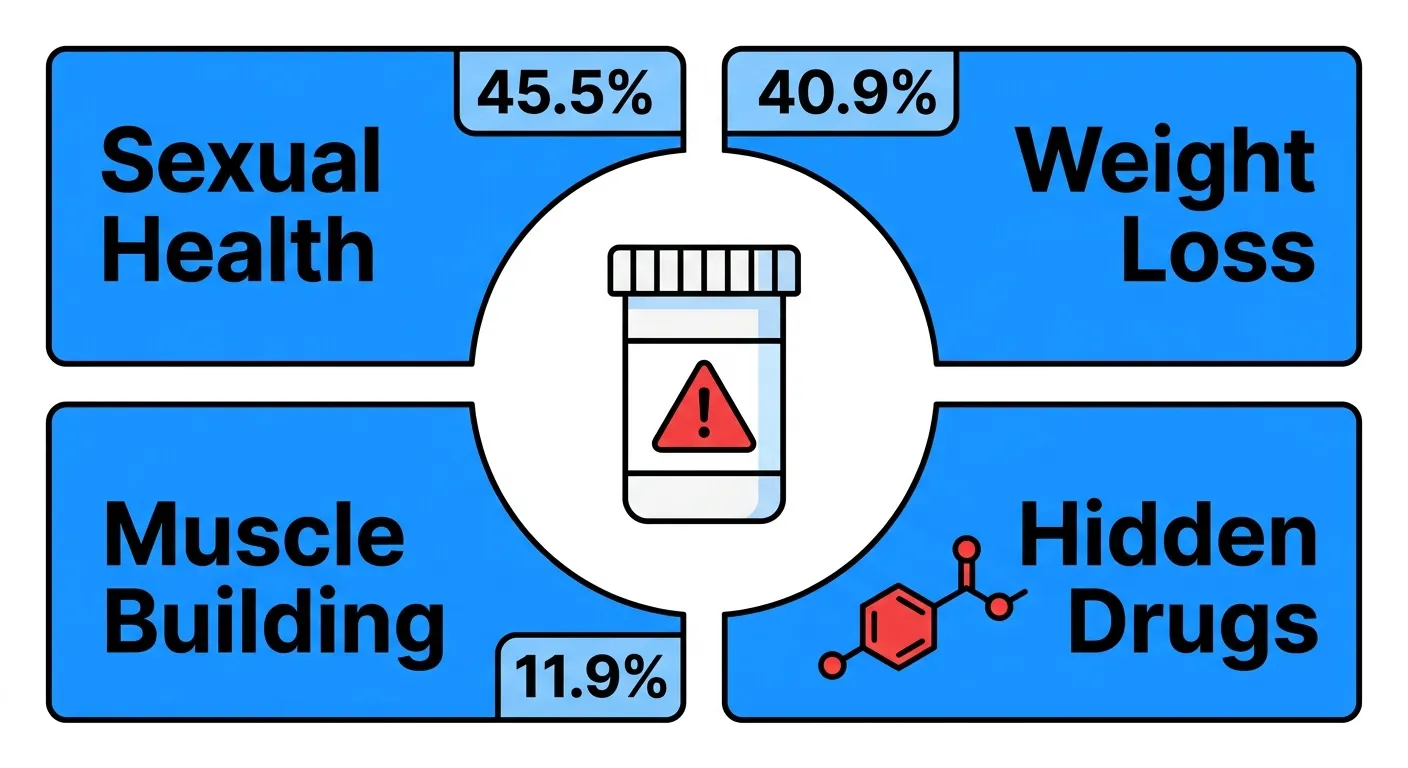
Regulatory data indicates that sexual enhancement products account for 45.5% of identified violations, followed closely by weight loss aids at 40.9% and muscle building formulations at 11.9% (2). These categories frequently serve as delivery vehicles for potent pharmaceutical agents never listed on the packaging. The result is a deceptive landscape for consumers seeking natural alternatives.
- Sexual enhancement
- These products are the most likely to be tainted, frequently containing the erectile dysfunction medication Sildenafil or its chemical analogues.
- Weight loss
- Formulations in this category often include Sibutramine, a potent appetite suppressant that was previously withdrawn from the market for safety reasons.
- Muscle building
- Products marketed for athletic performance or physique enhancement are commonly found to contain synthetic steroids or steroid-like substances.
Sexual enhancement, weight loss, and sports supplements: the highest-risk categories
Consumer demand for rapid, visible results drives manufacturers in these sectors to include undisclosed pharmaceuticals, a trend most evident in the sexual health market. Within a decade-long dataset of 353 adulterated sexual enhancement products, Sildenafil or a related analogue was detected in 287 instances—81.3% of the samples (2). This 81.3% rate indicates Sildenafil or an analogue is the predominant adulterant in this category, rather than an outlier.
- Sexual health prevalence: Within a decade-long dataset of 353 adulterated sexual enhancement products, Sildenafil or a related analogue was detected in 287 instances, representing 81.3% of the samples (2).
- Weight loss supplements: These products frequently harbor undisclosed stimulants to mimic the metabolic effects of pharmaceutical grade anorectics.
- Sports supplements: This category remains high-risk due to the inclusion of synthetic steroids and unapproved selective androgen receptor modulators like ostarine.
- Stimulant contamination: Many pre-workout powders have been found to contain DMAA, a stimulant that can significantly alter cardiovascular function.
Drug interactions caused by undisclosed ingredients
Combining unknown pharmaceuticals with an existing medical regimen introduces a level of unpredictability that can trigger severe physiological crises. Users are often unaware they are consuming active drugs, which prevents them from identifying potential contraindications with their prescribed medications. That risk is compounded by the fact that 20.2% of adulterated products contain more than one unapproved ingredient (2) — a cocktail of substances with unknown synergistic effects.
- Erectile dysfunction drugs hidden in supplements can trigger life-threatening drops in blood pressure when taken alongside nitrates or alpha-1 blockers.
- The mixing of certain botanical extracts with undisclosed stimulants may lead to the development of serotonin syndrome.
- Multiple hidden drugs within a single capsule increase the likelihood of unpredictable drug interactions that complicate emergency medical interventions.
Identifying these chemical overlaps is essential for quantifying the severe medical outcomes and systemic failures that these undisclosed ingredients frequently trigger.
Health risks of hidden pharmaceutical ingredients
These substances introduce serious health risks ranging from liver and kidney damage to severe allergic reactions and toxicity. Because dosages of unlisted drugs are often inconsistent, users face a constant threat of accidental overdose, dependence, or painful withdrawal. In documented cases reported to the FDA, these interactions have led to death. Research published in the New England Journal of Medicine estimated that approximately 23,005 emergency department visits and 2,154 hospitalizations occur annually in the United States due to adverse events linked to dietary supplements (3).
Symptoms that may signal a hidden drug ingredient
Recognizing physical warning signs is a vital defense against contaminated products. Many people assume natural formulas cannot cause rapid physiological shifts. They are wrong. The presence of synthetic drugs can trigger immediate and violent reactions, and recent FDA warnings have highlighted a disturbing trend where consumers experience life-altering complications shortly after ingestion. A “natural” label provides no protection against pharmaceutical adulteration.
- Neurological distress: Reports involving the brand Neptune’s Fix have documented users suffering from seizures and a total loss of consciousness.
- Systemic failure: Severe adverse events linked to tainted brands have resulted in hospitalizations and, in tragic instances, death.
- Inflammatory masking: Products like Artri King, Ortiga Mas Ajo Rey, Umary, and Amazy were found to contain undeclared dexamethasone and diclofenac sodium, which can cause gastrointestinal bleeding or psychiatric changes (4).
Why tainted supplements persist on Amazon, eBay, and other platforms?
Recent testing by federal regulators revealed that 100% of the 26 products sampled from one major platform contained undeclared active pharmaceutical ingredients (5). Online marketplaces remain a primary vector for these dangerous goods, driven by the sheer volume of third-party listings. Even when a specific brand is flagged, the underlying supply chain often stays intact — allowing the same risks to resurface under new names.
- Widespread contamination: Testing of 25 products from a second platform analyzed in the same study showed that 80% were tainted with hidden drugs (5).
- Whack-a-mole dynamics: Tainted supplements removed from the market are frequently replaced by other tainted supplements, as manufacturers simply rebrand the same illicit formulas to bypass automated filters.
- Global supply chains: The fragmented nature of online marketplaces makes it difficult for regulators to intercept every shipment before it reaches a consumer’s door.
Given the persistence of these products in digital storefronts, consumers must take verification into their own hands — starting with the FDA’s own databases.
How to check the FDA tainted products database and warning letters?
The agency maintains a searchable FDA Health Fraud Product Database listing dietary aids found to contain dangerous or unlisted substances. The government also issues public Warning Letters to manufacturers caught marketing products with unlisted pharmaceuticals. These documents are readily available to help you identify which companies have a history of non-compliance.
Step-by-step: searching the FDA tainted supplements list
Navigating these official records is straightforward once you know where to look. The interface is designed to help you quickly verify whether a specific brand has been flagged for safety violations.
- Access the search bar: Locate the search field on the database page and enter the specific product name or manufacturer you are investigating.
- Review the table fields: Examine the nine specific data points provided for each entry, which include the product name, the firm involved, their address, and the specific action taken by the agency.
- Check the product notification: Click on a specific entry to open the full notification page, which explains exactly why the item is considered dangerous.
- Monitor for re-entry: Be aware that even if a product is removed, manufacturers often launch new versions, so you should search for keywords related to the ingredients as well.
How to look up FDA Warning Letters and Close-out Letters for a brand?
These formal communications give you a clear window into a company’s regulatory history and their willingness to follow safety laws. When a firm is caught violating standards, it receives a formal notice detailing the specific legal infractions found during inspections or testing.
- Warning Letter
- A formal notification identifying significant regulatory violations that require immediate corrective action from the company.
- Close-out Letter
- A document indicating that the agency has verified the company’s corrective actions, though these are posted less frequently than the initial warnings.
- Visit the official inspections database and filter your search by the company name.
- Check the date of the most recent correspondence to see if the issues are ongoing.
- Look for a response from the firm, as they typically have 15 days to reply to the initial notice.
Limits of FDA warnings: products that remain on the market
A formal notice does not always mean a product disappears from digital shelves immediately. By late 2010, the agency had coordinated a recall for over 70 sexual enhancement items, 40 weight loss products, and 80 bodybuilding supplements (6). Despite those efforts, many hazardous items stayed in circulation. In early 2022, researchers discovered that nine out of 31 products previously flagged for prohibited stimulants were still available for purchase online (7) — on average, six years after the initial warnings were issued.
- If you find a product listed in the database:
- Do not purchase or consume the item, even if it is available on a major retail site.
- If a product has a Warning Letter but no Close-out Letter:
- Assume the safety issues have not been resolved and seek an alternative brand.
Beyond these databases, you should also learn to scrutinize the physical packaging for specific red flags that indicate a high risk of contamination.
How to evaluate a supplement label for red flags?
The FDA provides labeling guidance for dietary supplements to ensure manufacturers include mandatory disclaimers and maintain ingredient transparency. Even so, the Council for Responsible Nutrition notes that industry standards vary — making your personal scrutiny essential. Look closely at the fine print.
- Scan the ingredients list for a proprietary blend, which often serves as a way for companies to obscure individual ingredient amounts and hide low dosages.
- Identify label red flags such as the unauthorized use of the FDA logo or products that claim to be “Made in the USA” while the primary text is in a foreign language.
- Verify that the manufacturer provides a physical address or a working website, as vague or absent company information is a major warning sign.
Ingredients and claims to avoid
A professional-looking bottle does not guarantee that the contents match the promises on the outside. Some manufacturers ignore FDA guidance to market products that contain potentially dangerous substances. These items often bypass standard safety checks. Accuracy matters here.
- Ephedrine alkaloids: These were officially banned in 2004 because they present an unreasonable risk of heart-related illness or injury (8).
- DMAA and BMPEA: These synthetic stimulants are frequently flagged by regulators for posing severe cardiovascular risks to unsuspecting consumers.
- Illegal disease claims: Any product claiming to “cure” or “treat” a specific disease violates federal law; look instead for a legally permitted structure/function claim, which must be accompanied by a mandatory FDA disclaimer.
If you encounter a label that seems suspicious or makes grand promises, consult a healthcare professional or utilize verified databases. Trusted third-party resources make navigating these choices considerably easier.
Trusted resources for verifying supplement safety: NIH ODS, CDC, and Mayo Clinic
Authoritative resources like the NIH Office of Dietary Supplements provide the DSID and a label database covering over 200,000 products, while the CDC offers specific medication-list guidance for safety. Integrating these with Mayo Clinic clinical ingredient reviews allows you to verify substance efficacy and identify potential risks based on objective scientific data rather than marketing claims.
- NIH Office of Dietary Supplements
- This office serves as a primary hub for consumer guidance, offering detailed fact sheets and extensive label databases to help you understand recommended intakes and potential health effects.
- Centers for Disease Control and Prevention
- The agency emphasizes medication safety by advising adults to maintain a comprehensive list of all vitamins and supplements to share with healthcare providers.
- Mayo Clinic
- This renowned medical center provides clinical perspectives on supplement risks, highlighting the dangers of specific ingredients and the necessity of professional oversight.
NIH Office of Dietary Supplements: what it covers
The NIH Office of Dietary Supplements offers ODS fact sheets tailored for both consumers and professionals, available in English and Spanish to broaden accessibility. These documents cover a wide spectrum of ingredients — from standard vitamins and minerals to complex botanicals and probiotics. You can also find specific information on research projects and the latest scientific consensus on various substances.
A standout resource is the label database, which catalogs information for over 200,000 products sold across the United States (9). This tool lets you view actual package-label images, verify ingredient names, and check the specific amounts of dietary ingredients listed by the manufacturer. You can also review the health claims printed on the packaging to see how they align with federal standards — a useful check before you spend any money.
CDC and Mayo Clinic guidance on supplement risks
Adhering to the safety protocols established by leading health organizations can prevent serious medical complications. Every supplement carries inherent risks that must be managed carefully, and the CDC recommends a proactive approach to your wellbeing.
- Maintain a written list of every medicine, vitamin, and herbal product you take so your doctor can screen for dangerous interactions.
- Consult a pharmacist or physician immediately if you do not fully understand the instructions or warnings printed on a product label.
- Heed Mayo Clinic warnings regarding banned substances like ephedra, which was removed from the market due to links to heart attacks and strokes.
- Monitor your intake of common nutrients to avoid issues like vitamin D toxicity, which can lead to a buildup of calcium in your blood.
When to consult a healthcare professional before taking a supplement?
Professional guidance is your most effective safeguard, particularly for high-risk populations such as older adults or those with chronic conditions who require nuanced medical care. Always speak with a healthcare professional — a registered dietitian or a pharmacist — before starting a new supplement to discuss the specific benefits and risks for your body. While these products are widely available, they are not universally appropriate for every individual.
- If you are pregnant or nursing, as many ingredients lack rigorous safety testing for developing infants.
- If you are scheduled for surgery, as some herbs can increase bleeding risks or interfere with anesthesia.
- If you are managing chronic conditions like kidney disease or heart failure.
- If you are considering giving a supplement to a child.
Utilizing these trusted resources and speaking with your doctor will help you build a safer health routine, but knowing how to report unexpected problems to federal regulators is equally important.
How to report a suspected adverse reaction to the FDA?
When you experience an unexpected side effect, notifying federal authorities helps regulators track patterns that might otherwise go unnoticed. You do not need to be certain that a specific pill caused your symptoms to file a report. Providing as much detail as possible is what makes these submissions truly effective for consumer safety.
Several channels let you share this information directly with the government. The primary route for dietary supplement issues is the online Safety Reporting Portal, designed to capture comprehensive data on human health incidents. You can also utilize the MedWatch program or contact the SAFEFOOD Information Line for assistance.
Reporting through FDA MedWatch: a step-by-step guide
Accessing the federal reporting system is a straightforward process designed to accommodate your preferences and technical comfort. You can choose from several communication methods to ensure your experience is documented. Proof of a causal link is not required. A simple suspicion that a supplement triggered a medical issue is enough to justify your report.
- Navigate to the official website to submit a MedWatch report electronically for the fastest processing time.
- Download and complete Form FDA 3500 if you prefer to submit your documentation via mail or fax.
- Call 1-800-FDA-1088 to provide your information over the phone if you require direct assistance from a representative (10).
- Send your completed paper forms to the MedWatch Program at the specified FDA campus address in Maryland.
By taking these steps, you provide the data necessary for the agency to investigate potential health risks.
Sources
- accp1.onlinelibrary.wiley.com. White CM (2007).
https://accp1.onlinelibrary.wiley.com/doi/10.1002/jcph.2046 - jamanetwork.com. Tucker J, Fischer T, Upjohn L, Mazzera D, Kumar M.
https://jamanetwork.com/journals/jamanetworkopen/fullarticle/2706496 - FDA. Geller AI, Shehab N, Weidle NJ, et al.
https://www.nejm.org/doi/full/10.1056/NEJMsa1504267 - fda.gov. U.
https://www.fda.gov/consumers/health-fraud-scams/health-fraud-product-database - FDA. U.
https://content.govdelivery.com/accounts/USFDA/bulletins/2b1a939 - fda.gov. U (2010).
https://www.fda.gov/files/drugs/published/Letter-to-Manufacturers-of-Dietary-Supplements.pdf - FDA. Cohen PA, Avula B, Katragunta K, et al (2022).
https://jamanetwork.com/journals/jama/fullarticle/2794578 - fda.gov. U (2004).
https://www.fda.gov/regulatory-information/search-fda-guidance-documents/small-entity-compliance-guide-final-rule-declaring-dietary-supplements-containing-ephedrine - NIH. Office of Dietary Supplements: Dietary Supplement Label Database.
https://ods.od.nih.gov/Research/Dietary_Supplement_Label_Database/ - fda.gov. U (1088).
https://www.fda.gov/safety/reporting-serious-problems-fda/reporting-health-professionals
F.A.Q
What are hidden ingredients in dietary supplements?
Hidden ingredients are pharmaceutical compounds added to supplements without appearing on the label. These undeclared additives can pose serious health risks.
Which types of supplements are most likely to contain hidden drugs?
Supplements promoted for sexual enhancement, weight loss, and muscle building have the highest risk of containing hidden drug ingredients.
Why doesn’t the FDA catch all supplements with hidden ingredients before they reach stores?
The FDA doesn’t require premarket approval for supplements. Products are sold without proof of safety or effectiveness, and most issues are discovered through post-market surveillance.
What are some examples of hidden drugs found in supplements?
Sildenafil is frequently found in sexual enhancement products, Sibutramine in weight loss supplements, and synthetic steroids in muscle building formulas.
How can I check if a supplement has been flagged for hidden ingredients?
The FDA Tainted Products database allows checking whether a supplement has been flagged for hidden or dangerous ingredients.
What should I do if I experience side effects from a supplement?
Report unexpected side effects to the FDA through the Safety Reporting Portal or MedWatch, even if it’s unclear whether the supplement caused the problem.
When should I talk to a healthcare professional before taking a supplement?
Consult a healthcare professional before starting a new supplement during pregnancy, nursing, chronic illness, before surgery, or when considering use for a child.
